
Always Writing
On craft craving, the habit of attention, and the trap that lives between always writing and writing every day

The quote surfaces from my zibaldoni notebook without warning, a highlight from a book about writing I read two years ago, maybe three, a passage about the focused observation that turns ordinary experience into material. The charge is immediate, the same one from the lazy Sunday morning reading session when the passage first found me, that spark of recognition every avid reader carries without quite knowing why. I follow the shiny sprite back to the original source, then to the book that sent me there, and the scene I meant to write sits where it was, untouched, and an hour has passed without me writing a single sentence.
Procrastination and lack of focus are the wrong names for this familiar phenomenon, and the writer who has felt it knows it arrives neither unwanted nor unexpected.
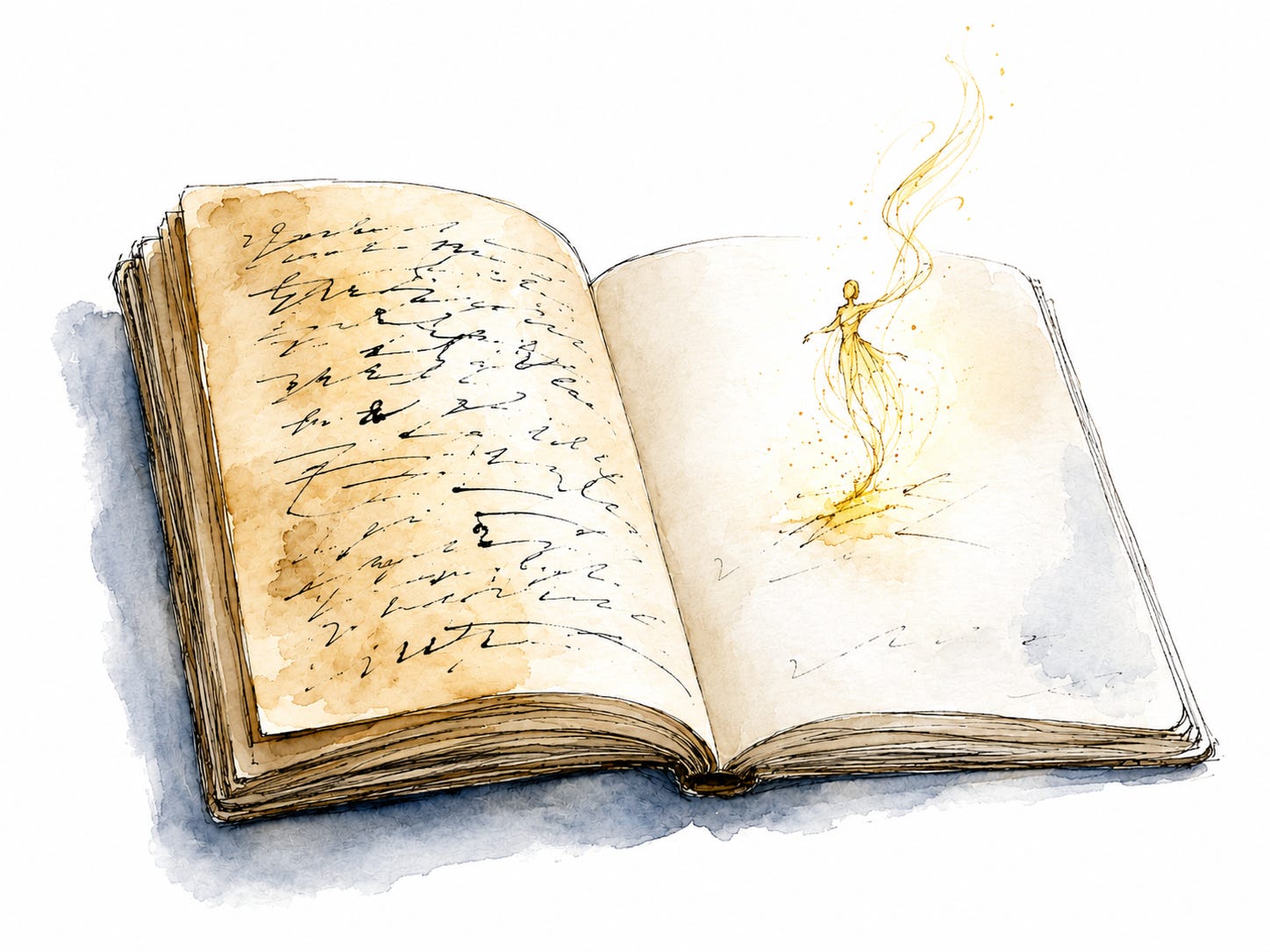
Maggie Smith names the tension plainly in Dear Writer. She is always writing, she says, but does not sit down to write every day, and when another writer advises a daily schedule, she has to roll her eyes in her mind only, in the interest of playing well with others. The pleasure in that confession lies in the honesty and the distinction it reveals. Always writing and writing every day are not the same thing. One happens in the body, in the drift of attention over the world. The other happens in the chair. They do not always coincide, and pretending they do produces insidious unearned guilt for the writer.
Literary Hub describes daily practice as both a discipline and a form of devotion, a gift of time given faithfully to what we love. Anyone who has kept a morning practice long enough to stop questioning it knows that liturgy from the inside. The keystrokes start to feel like rosary beads. You do not ask whether you feel like it. You go to the desk and trust the tradition.
Mason Currey, who spent years mapping the daily habits of artists and writers, observes that most of them perch precariously on a high wire between those two positions, committed to daily work but never entirely confident of their progress, always wary of the one off day that breaks the streak. That observation matters because it describes the superstition that rides alongside the schedule, the fear, half-held and rarely admitted, that a missed Tuesday means the novel will desert them for a more faithful author. When that fear arrives, the calendar has stopped serving the work and the writer has begun serving the calendar.
The trap lives on the other side as well. The writer who waits for the mood, for the unbroken afternoon and the perfect cup of lemongrass tea, serves a different superstition, their version of the writer’s ritual. Most of us move between these poles. We oscillate between the austere comfort of routine and the guilty thrill of ignoring it. This is why the language around daily practice turns theological so easily, full of sin and penance, when what we actually have in front of us is time and pages and a life.
Smith offers the more useful frame elsewhere in Dear Writer, when she writes about keeping the antennae raised, about the work of dialing past the static of ordinary responsibility to hear the quiet voice underneath. The schedule she describes is really a habit of attention, a practice of cultivating a mind that notices the world even on days when no new lines are added to the poem or the story. That attention-based understanding of practice does not cancel discipline. It relocates it.
Currey, who titled his book Daily Rituals but admits his real focus was routines, arrives at something the writing life needs. To follow a routine, he writes, is to be on autopilot. But a daily routine is also a choice, or a whole series of choices, a finely calibrated mechanism for taking advantage of time that cannot be recovered once spent. All of the artists and writers Currey studied made the time to get their work done, but there is infinite variation in how they structured their lives to do so. The variation is what matters for writers. The variation is the point.
Curiosity has always been my most reliable distraction, which is a generous way of saying my attention is easily seduced. Ramos On Craft exists because of that hunger, the years of reading slowly enough to let sentences teach me how to enter and capture the stories I needed to tell. The curated collection of quotes on fiction writing and craft I have built over those years is its most honest expression, thousands of passages marked in the moment of first recognition, each one carrying the charge of a door opening. When a quote surfaces out of my collection and the spark of recognition returns, the contact with language and with another writer’s hard-won understanding is genuine. The antennae are doing their job. What I have had to learn, and have not finished learning, is that craft craving and the writing work are not the same appetite. One feeds on insight. The other requires the page.
The quote has found you for a reason. Let it carry you back to the book that revealed it and the writer who crafted that sentence. That return to a marked passage long after you first found it loosens what the cursor and the empty line have been waiting for you to say. Follow the sprite, and follow it without apology. Writers who have followed it often enough trust its unintended destinations. What waits there is the crux of the scene they could not find before they left the desk the day before.
R.A.R.
If Ramos On Craft is finding you where you are in your writing life, the novels are where these ideas live at their fullest. Three Mangoes for Hemingway: A Road Trip Novel is available now on Amazon, and Searching for Margarito Temprana: A Barcelona Novella of Scent and Stone is available wherever books are sold. And if you know a writer who would find this useful, send Ramos On Craft their way.
Always writing and writing every day are not the same discipline. Which one are you actually practicing?
If Ramos On Craft is finding you where you are in your writing life, share it with a writer who needs it. And if you are not yet a subscriber, the full archive is waiting for you at ramosoncraft.substack.com